
Private Party Acquisition
Private Party Vehicle Acquisition: The Complete Guide for Dealerships
November 5, 2026
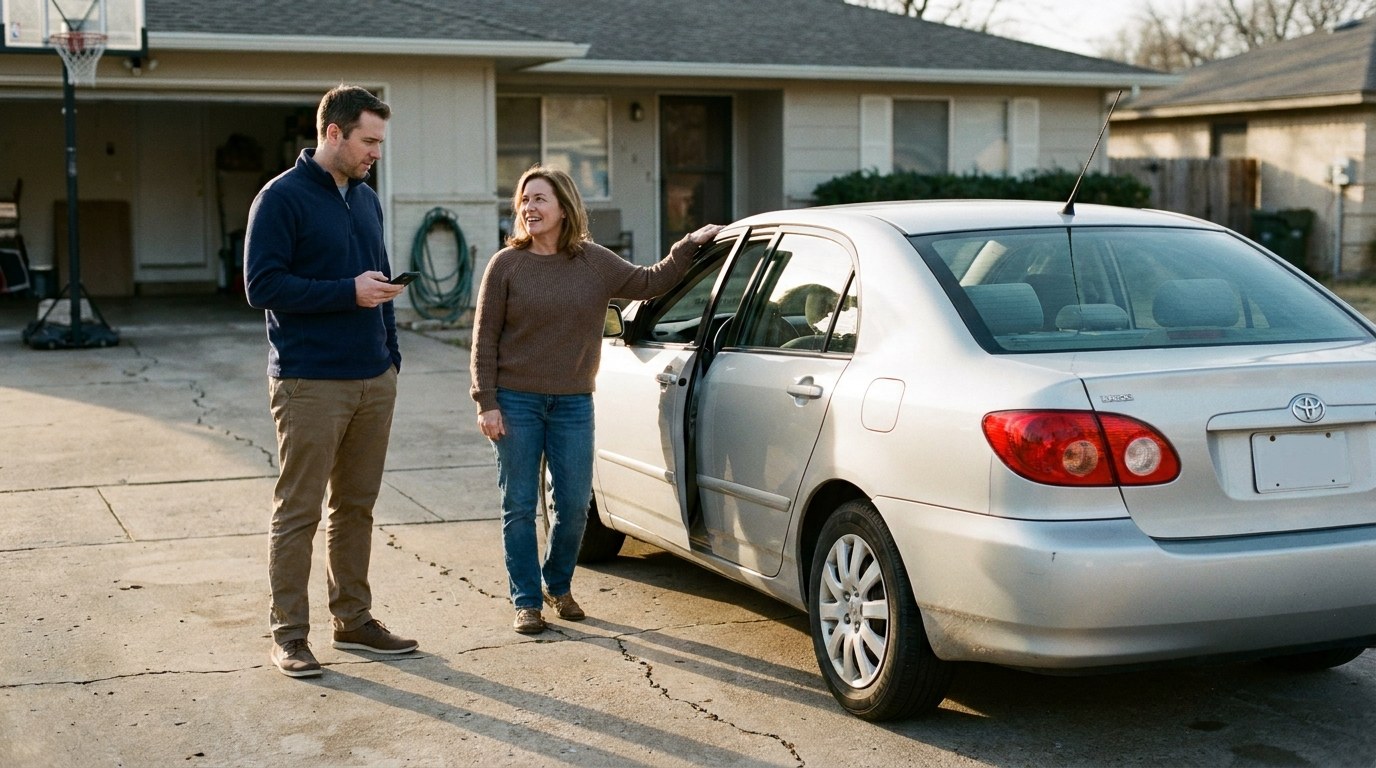
Private party vehicle acquisition is the practice of buying used cars directly from the individuals who own them, instead of through an auction, a wholesaler, or trade-in flow. For a dealership it means sourcing inventory from the roughly 18 million Americans who sell a car to another private party each year, about half of all used vehicle transactions in the country.
Most stores still treat it as a part-time task. A manager checks Marketplace when inventory dips. A buyer sends a few messages between other priorities. A unit gets bought occasionally, but nothing is repeatable. That is not a strategy, it is opportunistic sourcing.
The dealerships consistently pulling 15, 20 or 30 private party units a month are not better shoppers. They have a defined process: clear buy criteria, fast outreach, disciplined follow up, and tools that remove noise before it wastes anyone's time.
Inside larger groups this is often called vehicle procurement, or a vehicle acquisition network when it spans several rooftops. The label matters less than the operating rhythm underneath it, which is what this guide covers.
It includes benchmark data from six franchise rooftops running outbound private party buying every day, and the acquisition data behind how far below asking price these cars actually trade.
How big the private party market actually is
The National Automobile Dealers Association put private party sales at 28.6 percent of the used car market in 2015. By 2022 that figure had grown to 36.9 percent. Cox Automotive's 2025 numbers put private party at about half of all used vehicle transactions, roughly 18 million cars a year against total used sales near 38.3 million.
- 18M+ private party transactions a year
- ~47% of all used vehicle sales
- 16.3M total US new vehicle sales, for scale
More cars change hands between private individuals each year than are sold new in the entire country. If that channel is a side project at your store, you are treating the largest single pool of used inventory in America as a side project.
It is also almost certainly undercounted. Private sales register only when a title transfer is recorded and categorized cleanly. Every car sold to a neighbor or a nephew sits outside that number. 18 million is the floor, not the ceiling.
What we will not claim is that private party has overtaken retail. It has not. Retail still leads by roughly two million units. The accurate version is that the gap has narrowed for a decade and the private side is understated, which is more useful than a headline that collapses the first time someone checks it.
More detail on the sizing: How big the private party used car market actually is.
Why this became a tier one channel
Auctions are not a bad tool. They are a misused one, and the problem is structural rather than tactical.
When you win a car in the lane, you win because you were willing to pay more than the next most aggressive buyer in a room with the same market data you have. The margin was competed away before the car was loaded. On most days that is not an acquisition advantage, it is the definition of paying too much.
The cost has moved against you
All in auction cost is up 36 percent since 2019. That is not hammer price alone. It is the fee stack: buy fee, gate fee, post sale inspection, arbitration exposure, and transport. The national average auction fee sits near $985 a car before the unit turns a wheel on your lot.
Measured against auction units, dealers buying off the street through VETTX save upward of $1,200 a car, carry about 24 percent higher gross, and turn roughly 33 percent faster.
You do not know what you bought until it is on your lift
Condition reports miss things. Deferred maintenance, hidden damage and mechanical faults surface after the unit is yours, which raises landed cost and pushes out the retail ready date. Unplanned reconditioning costs you twice, in dollars and in days.
A private party car is different in a way that is easy to underrate. Somebody owned it, drove it, serviced it, and can tell you what is wrong with it while you are standing in their driveway looking at it.
The inventory itself is different
We get a lot of cars that are around 5 or 6 years old, as opposed to auction where we're hitting a lot of 2 or 3 year old cars. The age of the car is probably the other thing we just can't get at auction. Keith Kramer, General Manager, Harry Brown's Chevrolet
When every dealer in your market buys from the same auction pool, everyone ends up with similar inventory at similar money. There is no sourcing advantage left, so the only remaining lever is price, which is the lever that costs you gross.
A car listed by a private seller in your town was already retailed in your town once. The color sells there. The options sell there. It is a proven local unit, not a fleet car that ten other stores are also trying to move this month.
What these cars actually trade for
The most common objection to private party buying is that sellers are unrealistic. The data says otherwise. Across VETTX acquisitions, the average purchase price lands about 12 percent below the seller's original listing price, and the average car is bought roughly 10 days after it was first listed.
The spread widens as the car gets more expensive.
| Listing price bracket | Average difference, ask to buy |
|---|---|
| $5,000 to $15,000 | $1,796 |
| $15,000 to $25,000 | $2,541 |
| $25,000 to $35,000 | $3,300 |
| $35,000 to $45,000 | $4,063 |
| $45,000 to $55,000 | $5,048 |
| $55,000 to $75,000 | $6,613 |
| $75,000 to $150,000 | $11,178 |
Average difference between asking price and final purchase price, from VETTX platform acquisition data.
That is the number most dealers are missing when they decide the channel does not work. The seller who listed at $28,000 is not refusing to move. On average that car gets bought around $3,300 back.
The four ways a street car makes money
Most dealers evaluate acquisition on front end gross alone, which undercounts a private party unit badly, because three of the four income streams sit somewhere else.
1. Retail gross, front and back
Lower acquisition cost widens the front end. The back end is cleaner too, because you control the deal from the start and can structure financing and aftermarket products without competing against a trade appraisal the customer already resents.
2. Wholesale gross
Units that do not fit your retail mix still have value. Buying below market means you can wholesale for a gain rather than a loss, which turns your acquisition channel into a source of working capital when you need it.
3. Internal service gross
This is the one dealers consistently underestimate. Toyota of Newport spends roughly $2,000 reconditioning a street car against about $1,800 on an auction or rental unit. Slightly more money out. But the service gross they keep went from about $400 a car to about $800. Eleven percent more spend, double the return.
4. Consumer engagement
Every purchase puts a real person from your market across the desk from you. Some of them trade. Some buy. Most tell somebody.
Sometimes it works a car deal out of it. You'll buy somebody's car, but that will turn into a car deal. Getting to meet someone you probably have never met before, potentially bringing in another trade off that vehicle you bought. The list of reasons to buy privately just keeps growing. Keith Kramer, General Manager, Harry Brown's Chevrolet
Dennis Dillon Auto Group in Boise averages about $7,000 per car once front end, finance and service are combined, roughly 67 percent above the national average for a used unit, with reconditioning running about 25 percent below average. They bought 647 cars this way in a single year. Read the Dennis Dillon case study.
What good looks like, in numbers
Benchmarks for a single dedicated buyer, taken from stores running this as a department rather than an errand.
| Metric | Good | Great | Best in class |
|---|---|---|---|
| Acquisitions per month | 15 | 20 | 25+ |
| Gross per unit, front and back | $3,000 | $4,500 | $6,000 |
| Days to turn | under 45 | under 30 | under 21 |
The usage number behind those volumes is unglamorous and consistent: four protected hours a day, five days a week, from one dedicated person produces roughly 15 to 20 acquisitions a month. Stores that push to six or eight hours reach 30 to 40. What does not work is an hour squeezed between other duties.
Before you start
Programs launched without a foundation waste time, irritate sellers and generate data you cannot trust. Assess honestly against this list first.
- A defined acquisition budget, committed weekly or monthly
- A named point of contact for inbound seller responses
- A CRM or acquisition platform to track outreach, offers and closings
- Clear buy parameters, defined in tiers. Tier one is daily and non negotiable: high velocity, strong local demand, fits your brand, easy recon, easy financing. Tier two is solid but not urgent, typically under 10 years and under 120,000 miles. Tier three is opportunistic only, where the wholesale spread makes it a layup.
- An offer delivery process targeting same day, measured from the seller's first reply
- Same day payment capability, or within 24 hours at the outside
Building the team
The most common reason private party programs fail has nothing to do with the market. Nobody owns the channel. It gets handed to a buyer or manager who is already stretched, produces inconsistent results, and is quietly abandoned around month three.
The three roles that have to exist
- An executive sponsor. The GM, owner or director, visibly bought in. Not cc'd on a report, actually setting the expectation and holding the number.
- An assigned buyer. One or more people who own daily platform usage. This is their job, with time scheduled every business day rather than fitted around other duties.
- An assigned appraiser. One or more people committed to turning sight unseen appraisals around on time. A fast buyer behind a slow appraiser is still a slow store.
Accountability runs in one line: triage, outreach, appraisal, offer, valuation, close. Every step has a name against it.
Do not route this through the BDC
It is the most common structural mistake and it is the opposite of what works. A seller who gets a generic first message from a shared queue, then gets handed to somebody else, has already decided you are a vendor rather than a buyer. The whole advantage of this channel is one person owning the relationship from first contact to check. Spread it across a pool and you have rebuilt the thing you were trying to escape.
Who the buyer should be
This is the part that surprises people. Across the operators we work with, the traits that predict success are drive, hustle, and no fear of talking to strangers while telling them the truth. Automotive experience barely registers.
The buyer at Chuck Patterson Toyota came out of the detail department with no retail background, and now averages more than 20 cars a month across 500 plus vehicles bought. At Hoblit CDJR the GM moved one salesperson into the buyer's seat and that person buys 20 cars a month, every month. One of the two buyers at Toyota of Newport spent 21 years in the military and had never bought a car in his life. He was doing 10 to 11 a month from the start.
Store size is not the gate either. Small stores in small markets run competitive numbers on one committed person held to a number.
The trait that decides it is tolerance for rejection. A buyer sends far more numbers than get accepted, so the person has to be fine with sending one, hearing no, and following up anyway.
If you do not have that person on staff, VETTX recruiting sources and places them.
The daily workflow
The difference between a store buying two or three units a month and one buying 15 to 20 is almost entirely process. A repeatable daily structure is what creates that gap.
Morning, 60 to 90 minutes. Market scan and new outreach
- Run a filtered market scan against your buy parameters
- Review filtered results and dismiss flagged junk: salvage, flood, dealer listed, pricing outliers, duplicates
- Identify every new qualified listing the scan surfaces
- Open first contact, text first, email second
- Log every contact with source, asking price and timestamp
Midday, 30 to 45 minutes. Follow up and offers
- Work overnight and morning responses
- Move warm leads to offer, delivered the same day the seller replies
- Run day two and day three sequences for non responders
Afternoon, 30 minutes. Pipeline review
- Review new contacts, offers pending, offers accepted, appointments set
- Escalate stalled deals where the seller is warm but price is blocking
- Update the KPI dashboard
Five to six days a week, consistently. The channel rewards regularity far more than intensity.
Outreach that actually works
Most outreach fails because of approach, not price. Sellers are not leads. They are people who own an asset and are deciding who to trust with it.
Text first, call second, email third. Sellers check texts fastest and the format invites the short replies that move a conversation forward. But texting alone is where most buyers stall out, because it is easy, which means everyone does it.
So pick up the phone. The buyer who calls gets to the truth faster and stops wasting time on endless back and forth. Text to open the door, call to move the deal.
The first message
The goal of a first touch is not to make an offer. It is to signal you are a real buyer and earn the next step.
Hey, I'm interested in buying your [Make Model]. Do you have time for a quick call? Just a few questions.
Quick question on the [Make Model], any issues I should know about before I come see it?
What to establish before you talk price
Three non negotiables on every call: condition, ownership and payoff, and the VIN. Then three questions that tell you whether this is real: why they are selling, what their timeline is, and where their price anchor sits.
Never disqualify a seller because the listing price is too high. Across VETTX acquisitions, sellers land about 12 percent under their original ask. The number on the listing is an opening position, not a verdict.
Making the offer
A clear, fair, transparent number kills most objections, because you have stopped talking about buying the car and started buying it.
Hey [Name], I can cut you a check today for $____ as long as it's as described. I'm [First Name], a buyer at [Dealership]. I'll handle the paperwork and make this easy. Can you bring it in [today/tomorrow/this week]?
Follow up at least three times
Most deals do not close on first contact. Day one introduces. Day three checks in softly. Day six or seven leaves the door open. The majority of eventual conversions come from touches two and three, which is exactly where most dealers quit.
There is a limit. Do not chase one seller for months. If you need more at bats, widen your radius so you are touching enough fresh listings daily. Full follow up sequences here.
Speed is the sharpest edge you have
Private sellers field multiple inquiries. A personalized message that lands within minutes of a listing going live performs dramatically better than a generic note 18 hours later. Groups running this well measure first response in minutes rather than hours, which is only achievable with real time alerts and automated first contact.
Why sellers behave the way they do
People list privately because they believe they will net more. What actually happens is they get spammed, ghosted, lowballed and worn down. They have no sales skill, no time, no process for payoff and title, no safe meetup, and no funding certainty. They are one person trying to do a dealer's job.
Which means your advantage is not a clever line. It is responding fast, being clear, being honest, making it easy, and treating them like a person.
Closing the deal: payment, title and pickup
Finding the car is the part everyone focuses on. Losing the car usually happens later, in the twenty minutes where a seller decides whether you are a real option or a hassle.
Private sellers are not holding out for the last hundred dollars. They are weighing your offer against the person who wants to meet in a parking lot at 9pm with a cashier's check they cannot verify. Three things settle that comparison.
Pay same day
Hoblit CDJR runs same day payoffs with the title and DMV work handled in house, and walks a deal back transparently if the car is not as described. A check in hand the same afternoon beats a higher number that arrives next week, and it is the single most repeatable reason sellers choose a dealer over another private buyer.
Own the paperwork
Most private sellers have no process for a loan payoff, a lien release or a title transfer, and no idea how to do it safely. That is friction for them and leverage for you. Handling the payoff directly with the lender, and doing the title work yourself, removes the part of the transaction they were quietly dreading.
Offer pickup
Transport logistics sound like an operational detail and function as a competitive weapon. Going to the car instead of asking the seller to drive to you converts deals that would otherwise stall, particularly with local households selling a second vehicle they still depend on. Set a geographic limit, define the inspection process for when the car arrives, and make it a standing offer rather than a concession.
Groups should standardize all three at group level: offer authority by segment, response time targets, and pickup radius per rooftop.
The five rules of closing a private seller
- Speed wins.
- Certainty beats price. A number they trust beats a bigger number they do not.
- Logistics close deals. Payoffs, title, meeting location, a ride home.
- One number, one story. Moving your own number teaches them not to believe you.
- Be human.
The technology stack
Roughly 450,000 new private seller listings are aggregated across the major marketplaces every month. That is the raw material, and no buyer checking tabs by hand touches a meaningful fraction of it.
The operational shift of the past two years has been moving listing discovery and filtering off humans. For manual programs, the volume of noise, duplicates, dealers posing as private sellers, salvage titles and pricing outliers, made scaling outreach close to impossible.
| Layer | Function |
|---|---|
| Listing aggregation | Pull private seller listings from Facebook Marketplace, Craigslist, Autotrader, Cars.com and OfferUp into one feed |
| AI filtering | Remove junk, score leads, detect dealers using private seller profiles |
| License plate to VIN | Decode a plate from listing images, pull history, pre-score before contact |
| CRM and pipeline | Track outreach, offers and closings in one place |
| Outreach automation | Trigger first contact when a qualifying listing appears |
| Appraisal integration | Deliver market based offers quickly |
| Reporting dashboard | Track team and channel performance |
Filtering is the layer that pays for itself first. Removing dealer relists, salvage history and duplicates before a buyer sees them is the difference between a specialist spending the morning on real opportunities and spending it on noise. What private party acquisition software does covers this in detail.
Worth being direct about
Software finds and filters listings and keeps every conversation in one place. It does not call the seller for you, negotiate for you, or buy the car on your behalf. Your buyer does that. Any vendor telling you otherwise is selling you a call center, and a call center cannot look at a car in a driveway.
The KPIs that matter
A mature operation tracks the full funnel, because the data tells you where the process is breaking rather than just whether it is working.
Contact and outreach
| Metric | Why it matters |
|---|---|
| Leads contacted per day, per buyer | Tracks activity and effort |
| First response time, average minutes | The single biggest driver of contact rate |
| Contact rate, percent of leads reached | Set your baseline in month one, then hold the team to beating it |
| Follow up sequence completion | Shows whether buyers use the system or bypass it |
Pipeline
| Metric | Why it matters |
|---|---|
| Offers made per week | Leading indicator of deal volume |
| Offer acceptance rate | Reveals pricing competitiveness and buyer skill |
| Appointments scheduled | Middle funnel health |
| Appointments held against scheduled | Reveals appointment quality and seller commitment |
Acquisition
| Metric | Why it matters |
|---|---|
| Units purchased per buyer per month | Twenty a month is the top performer benchmark, at twenty offers a day |
| Cost per acquired unit | Critical for margin management |
| Purchase price against book | Ensures buyers are paying right, not just winning deals |
| Days to retail ready | Connects acquisition to inventory velocity |
Group rollup
| Metric | Why it matters |
|---|---|
| Units acquired per rooftop | Identifies underperformers and best practice to copy |
| Private party as percent of used inventory | Tracks progress toward your channel goal |
| Gross per unit, private party against auction | The ultimate argument for the model |
When those numbers live in the platform rather than a spreadsheet somebody updates on Fridays, your used car director manages in real time instead of in retrospect.
Scaling across multiple rooftops
A single point store builds a strong program with one focused person and the right tools. Multi-location groups face a different problem: how to scale a people and process intensive channel across five, ten or twenty rooftops without it becoming incoherent.
Model A. Centralized buy center
One dedicated team handles discovery, filtering and first contact for the whole group, then pushes warm leads to rooftop buyers for offer and close. Best for groups with five or more rooftops in a concentrated area.
Model B. Distributed buyers, centralized visibility
Each rooftop has its own buyer, or buyers cover two to three stores, with all activity flowing into one dashboard the used car director reviews centrally. Best where rooftops sit in different markets and local pricing knowledge matters.
In both models the non negotiable is a shared inbox. Without one, two stores in the same group contact the same seller, which costs you the deal and the reputation in one move. Group level guidelines apply everywhere, and individual rooftops layer in local criteria on top.
What it looks like when it is working
The following is a field report from six franchise rooftops in the VETTX Elite Dealer Group, a monthly peer call modeled on a dealer 20 group. These numbers are outbound private party purchases only. No auction, no instant cash offer, no other channel.
Chuck Patterson Toyota, Harry Brown's Family Automotive, Future Ford Lincoln Roseville, Dutch Miller Auto, Burt Watson Chevrolet, Dennis Dillon.
| Metric | Average across the six stores |
|---|---|
| Purchases per month | 20 to 21, with multiple stores reporting peak months in the 40s |
| Buyers per store | One to five, most run a single buyer |
| Offers sent | About 20 a day, roughly 440 to 500 a month |
| Ask against buy price | Median $3,000 back, typically $2,000 to $4,000 |
| Days to turn | 29 average |
| Reconditioning | $1,000 to $1,400 per car |
| Offer to purchase conversion | About 5 percent |
The arithmetic underneath that is the most useful thing in this guide. Twenty offers a day turns into roughly twenty cars a month. Not because the close rate is good, but because it is predictable. Once you know your conversion holds near five percent, adding a buyer or expanding a radius becomes a calculation rather than a gamble.
The debate inside the group
The high performers argue you can pay more for the right private party unit. Not everyone agrees, but the reasoning is consistent: better units mean better gross, cleaner recon and faster turn, and if you do not buy it, the dealer across the street will.
The argument that carries the room is inventory risk rather than price. You cannot sell a car you do not have, and a street car you paid book for is a known quantity in a way an auction car never is.
Published results from individual stores
| Dealership | Result |
|---|---|
| Dennis Dillon Auto Group | 647 cars in one year, about $7,000 gross per unit |
| Chuck Patterson Toyota | 500 plus vehicles, roughly $4M added gross, 20 plus a month from one buyer |
| Cronin Auto Group | 104 cars in under 90 days, 54 in a single month |
| Future Automotive Group | 115 private party purchases in one month, up from zero |
| Hoblit CDJR | 40 cars and over $200,000 gross in 75 days |
| Toyota of Newport | More than a car a day within 60 days, 21 day average turn |
| Harry Brown's Chevrolet | 15 to 20 a month, first car bought inside two weeks |
| Walnut Creek Honda | 55 percent higher front end gross than their auction units |
| Alpine Buick GMC | About $2,500 front end gross per unit |
Full write ups: dealer results.
Why programs fail
- Nobody owns it. The job belongs to whoever has a spare hour, which means nobody.
- One touch and done. No follow up sequence, so the deals that close on touch three never close at all.
- Lowballing before rapport. A number with no relationship behind it reads as an insult.
- Treating fresh and stale listings identically. A car listed an hour ago and one listed three weeks ago need different conversations.
- No buy parameters. Outreach starts before anyone defines what a good car is.
- Judging it in month one. Leadership evaluates on the first thirty days, which is the month the buyer is still learning to hear no.
Frequently asked questions
What is private party vehicle acquisition for dealerships?
It is the practice of purchasing used vehicles directly from individual owners rather than through auctions, wholesalers or other dealers. Dealerships contact private sellers listed on platforms like Marketplace, Craigslist, Autotrader and Cars.com, make direct offers, and acquire inventory at below auction cost with no buyer fees.
How do dealerships reduce their dependence on auctions?
By building a second sourcing channel that does not compete on price with every other dealer in the region, which in practice means buying directly from private sellers. It requires three things: somebody whose actual job it is, a way to see every local listing without checking sites by hand, and the discipline to follow up past the first no.
What does it cost to buy from a private seller instead of the auction?
Less, once you count everything. You remove the buyer fee, which averages near $985, and usually transport. Reconditioning runs $1,000 to $1,400 on a typical street car, and roughly half of that spend returns through your own service department.
How far below asking price do private party cars actually sell?
Across VETTX acquisitions, about 12 percent below the original listing price on average, which widens with vehicle value. A car listed between $25,000 and $35,000 is bought around $3,300 back of ask. Cars listed between $5,000 and $15,000 average about $1,796 back.
How many cars can one buyer acquire per month?
Fifteen is solid, twenty is good, twenty five or more is best in class. The usage pattern behind twenty acquisitions a month is roughly four hours of focused platform time per day, and about twenty offers sent daily at a five percent conversion.
How long before a private party program produces cars?
Faster than most expect. Harry Brown's Chevrolet bought their first car inside two weeks of launching and hit 18 to 20 units in month two. Toyota of Newport averaged more than a car a day within 60 days.
Is this the same as paying for instant cash offer leads?
No, and the distinction is financial. Instant cash offer leads are inbound, paid per lead, and many are price shoppers. Private party acquisition is outbound: you go to vehicles already listed for sale, with no per lead fee. Dealers routinely spend $20,000 to $30,000 a month on inbound lead generation that an outbound program replaces. Roughly three of four instant cash offer leads come from people with no real intent to sell, which is the cost nobody prices in.
Does this work for independent dealers or only franchise stores?
Both. Park Marina Motors, an independent in Redding, California, runs 10 to 30 private party purchases a month. Franchise groups like Cronin and Dennis Dillon run the same process at larger scale. What changes is volume, not method.
What about multi rooftop groups?
The process is identical but coordination becomes the constraint. Without one shared system, two stores in the same group contact the same seller. Groups running this well centralize listings and conversations so every buyer sees what every other buyer has touched, using either a central buy center or distributed buyers with centralized reporting.
What technology does a dealership need to run this at scale?
At minimum a listing aggregation tool, an AI filtering layer, a CRM for pipeline, and an appraisal tool for fast offers. Best in class setups add license plate to VIN decoding, automated first contact, and real time listing alerts.
How do you handle sellers who do not trust dealerships?
By being specific and transparent early. Dennis Dillon gives a $3,000 range on the phone before anyone drives anywhere, then narrows it with the seller watching the valuation on screen. Most seller resistance is a reasonable expectation of being lowballed, and the fix is not lowballing them.
What is a vehicle acquisition network?
It is the term dealer groups use for a coordinated buying operation across multiple rooftops, where listing discovery, seller outreach and reporting run through one shared system rather than each store working independently. In practice it is the same private party process described here, with a central hub or shared inbox preventing two stores from contacting the same seller.
Does this work for older or higher mileage vehicles?
Yes, and that is often where the margin is. Street cars skew older than auction inventory, commonly five to six years old against two to three at the lane, and older vehicles carry less competition from other dealers. The tradeoff is reconditioning, which runs $1,000 to $1,400 on a typical street car, with roughly half returning through your own service department.
What kind of person makes a good acquisition buyer?
Drive, hustle, and no fear of talking to strangers while telling them the truth. Automotive experience is close to irrelevant. The buyer at Chuck Patterson Toyota came from the detail department. Expect far more no than yes, so the trait that matters most is following up anyway.
Starting in the next 30 days
- Week one. Name the buyer. Not a committee, a person, with acquisition in their title and their pay plan. Set a target measured in conversations, not cars.
- Week two. Define the car. Year range, mileage band, price point and the makes that genuinely turn in your market. Pull your own last 90 days of sales to find them rather than guessing.
- Week three. Set your ceiling before you need it. Work backward from retail ceiling, target gross, average recon and fees. If a car does not fit, you pass. The discipline up front is what creates the gross at the back.
- Week four. Run the follow up. This is the week programs quietly die, because the first wave of noes arrives and nobody warned the buyer that nineteen out of twenty conversations are supposed to end that way.
Then act daily, assess weekly, adjust monthly, and repeat until the auction is optional.
Go deeper
The full operating manual, including outreach scripts, offer authority guidelines, objection handling, meeting cadence and the complete funnel framework, is in the VETTX Private Party Playbook.
To see the workflow running, see how VETTX works.
Related Posts
Americans Sold More Cars to Each Other Last Year Than the Entire New Car Industry
About 18 million used cars changed hands with no dealer involved last year. That is nearly half the used market, and more cars than the entire new vehicle industry sold.

Private Seller Sourcing: The Competitive Edge Most Dealerships Are Missing
Franchise dealerships across the country are facing the same brutal truth: the old ways of sourcing inventory just don’t cut it anymore.
Why Private Party Leads Are the New Gold Standard
Dealers have relied on auctions for decades, but the landscape is shifting fast.
See it in Action
Discover how VETTX can supercharge your vehicle buying center. Schedule a free strategy call with our experts today and take the first step towards dominating your market.
