
Automotive News
State of the Private Party Market in 2026
May 8, 2026
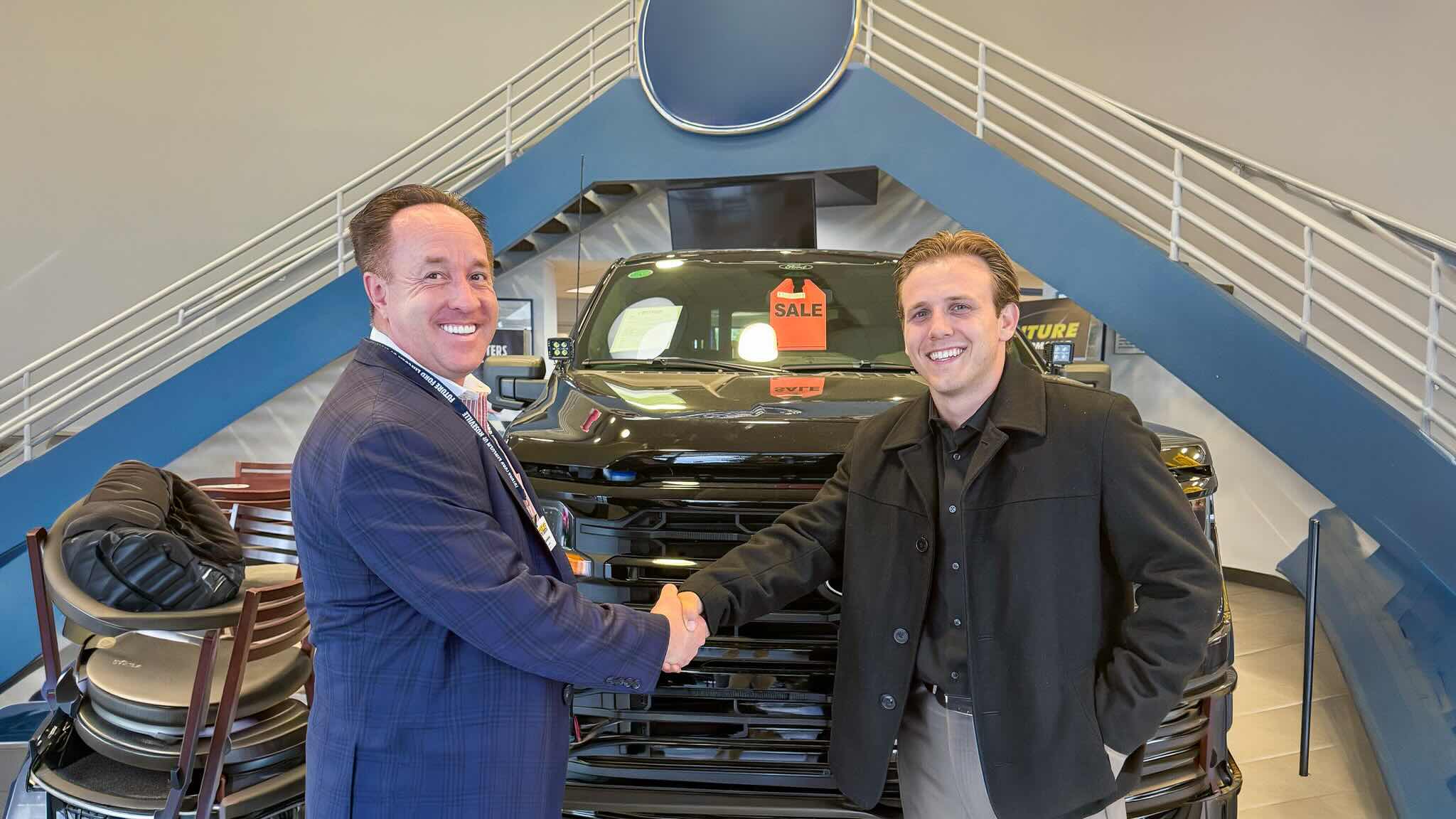
20 offers a day = 20 cars a month.
Most dealers know private party matters. Almost everyone agrees the money is made in the acquisition. The stores winning right now prioritize buying over selling.
This article is a 2025 field report pulled from patterns across six franchise rooftops in the VETTX Elite Dealer Group, a monthly peer call modeled after a dealer 20 group, focused on outbound private party buying. Less theory, more of what’s actually happening day to day.
These stores were selected because they run private party the way it’s supposed to be run. Leadership is bought in, the team executes and they consistently use the support resources available instead of trying to freestyle it. They also buy a lot of cars. This isn’t a massive study. The point is to share a real benchmark so you can stack your numbers up against some of the better buying operations in the nation.
The six participating stores
■ Check Patterson Toyota (Eddie Fajardo)
■ Harry Brown’s Family Automotive (Marc Fleig)
■ Future Ford Lincoln Roseville (Daniel Howes)
■ Dutch Miller Auto (Nicholas Patton)
■ Burt Watson Chevrolet (Tyler Kuch)
■ Dennis Dillon (Bryan Bough)
The Numbers
These numbers reflect the averages of the six stores outbound private party purchases only (no auction, no instant cash offer and no other acquisition channels).
Performance Metrics
Purchases: 20 to 21 cars per month on average (peak months were higher, with multiple stores reporting months in the 40s)
Number of buyers: one to five (most stores run one buyer, some scale to four to five)
Activity: ~20 offers per day, roughly 440 to 500 offers per month (depending on working days)
Ask vs. buy price: median $3,000 back (typical $2,000 to $4,000)
Turn: average of 29 days
Recon: $1,000 to $1,400 per car
A Few Takeaways:
1. This is a numbers game: Good operators don’t get emotional about listing prices. On average, they’re buying cars about $3,000 back of the list price. Touch every new lead daily (even if the ask is unrealistic), get a real number out fast and let follow-up do its job.
2. Offer-to-purchase conversion: Across these stores, the offer-to-purchase conversion averages around 5%. About 20 offers a day turns into roughly 20 cars bought over the course of a month.
3. Scalability: Once these metrics are tracked consistently, it becomes much easier to add another buyer, expand the market and scale results.
Qualitative Patterns
How to Actually Run Outbound
1. Focus on what you’re buying, not how you’re selling.
Better inventory makes everything downstream easier. Cleaner grosses, cleaner recon outcomes, less drama in the lane and a sales team that doesn’t have to push product.
2. This is not “a few wins here and there.”
Private party can be a consistent, repeatable channel when it’s run like a real department. Most stores say “we do private party” when what they really mean is someone checks Marketplace between deals.
A real buy center looks like this:
■ At least one dedicated buyer
■ Protected buyer time (not sales doing it between deals)
■ Daily cadence/KPIs that stay consistent
■ Activity reviewed weekly (daily is even better)
■ One clear owner of the operation (the puck has to stop somewhere)
VETTX can support the workflow, training and buyer coaching, but the software is not the point. The point is the operating rhythm. Tyler Kuch said it plainly: “Opening a dedicated buying department changed the operation from reactive to intentional.”
3. Don’t overcomplicate it.
Don’t confuse simple with easy. Doing this at scale is a lot of work (harder than keeping your hand raised at the auction), but the process is still simple. Touch as many sellers as you can, be respectful, REPEAT.
Stop overthinking inventory mix and “overpaying.” Fill the pipeline first. Most stores don’t lose private party because sellers are “crazy.” They lose because they’re slow, inconsistent or they quit following up.
There’s follow-up, and then there’s wasting time. Don’t get stuck chasing one seller for months. If you need more at-bats, expand your radius so you’re touching enough fresh listings every day.
And one more thing that kept coming up: PICK UP THE DAMN PHONE. Text is easy, which means everyone does it. The buyer who calls gets to the truth faster and stops wasting time on endless back and forth. Text to open the door, call to move the deal.
4. Data, data, data. What gets measured gets managed.
Yes, “tracking” makes some people tune out. And if it’s manual, it can get tedious. But a simple spreadsheet works, and private party management software like VETTX can handle this automatically.
At the simplest level, track these daily:
■ New leads contacted (same day)
■ Follow-ups completed (daily)
■ Appraisals completed (target actual cash value)
■ Offers sent (range or firm number, the key is accuracy and volume)
■ Appointments set
■ Purchases (most dealers only track this, but it’s a lagging indicator)
5. Who your buyer should be
The strongest buyer traits the group kept calling out were simple:
■ Buying experience does not matter at all (Marc Fleig).
■ Drive and hustle (Nicholas Patton).
■ Zero fear of talking to people and comfortable delivering truth (Bryan Bough).
I’d add:
■ Your buyer will literally fail 95% of the time on average. Buyers have to be OK with sending a number, hearing no and following up anyway.
■ The obvious: phone skills, phone skills, phone skills.
■ Retail auto experience is good, but if it’s the right person, they could have never bought or sold a car in their life and rock this thing.
If you don’t have someone like this at your store, VETTX has a full recruiting team that will place one for you.
The Hot Take
The final takeaway, and the big debate: you can pay more for the right private party unit.
Not every store thinks this way, but it’s a common theme among the high performers. They’d rather stretch a little on a clean, retail-ready car than fight for scraps in the lane.
Some dealers disagree with this, but it’s not complicated. Better units usually mean better grosses, cleaner recon and faster turn. And the underrated advantage is competition. If you don’t buy it, your neighboring dealer or a local private buyer will.
Here’s how three of the stores put it:
■ “We need to pay up for nicer units even if we are paying book or a little more. We can’t sell it if we don’t have it.” (Eddie Fajardo)
■ “I’d rather lose on a private party acquisition than guess on an auction car.” (Marc Fleig) ■ “Better to sell a used car to $0 PVR after recon than have it be sold by your neighbor across the street.” (Daniel Howes).
Related Posts

What The Current Chip Shortage Means For Car Dealers
See it in Action
Discover how VETTX can supercharge your vehicle buying center. Schedule a free strategy call with our experts today and take the first step towards dominating your market.
