
Private Party Acquisition
The 2026 Complete Guide to Private Party Vehicle Acquisition
April 16, 2026

The Complete Guide to Private Party Vehicle Acquisition (2026)
Private party vehicle acquisition is no longer a sideline channel. For dealerships under constant inventory pressure, it is one of the few sourcing options that can still deliver meaningful margin without auction‑style fees or dependence on trade‑in flow.
Most stores still treat it as a part‑time task.
A manager checks Marketplace when inventory dips. A buyer sends a few messages around other priorities. A unit gets bought occasionally, but nothing is repeatable. That is not a strategy; it is opportunistic sourcing.
The dealerships consistently pulling 15, 20, or even 30 private‑party units per month are not simply “better shoppers.” They have a defined process: clear buy criteria, fast outreach, disciplined follow‑up, and tools that remove noise before it wastes time.
So, if you are building a private party acquisition program from scratch or auditing one that isn’t performing, this is the most complete operational guide available for 2026.
Why Private Party Vehicle Acquisition Is a Tier-1 Strategy in 2026
Private party vehicle acquisition has become a tier‑1 sourcing channel because auction costs continue to climb, inventory pressure has not normalized, and motivated sellers are now far more reachable through digital marketplaces.
This creates a unique window in which dealers can acquire clean, late‑model vehicles at below‑market prices before they hit auctions or competitors’ radars if they build a fast, repeatable acquisition system.
What You Need Before You Start Private Party Vehicle Acquisition
Dealers who launch private party outreach without the right foundation waste time, frustrate sellers, and generate bad data. Before you commit to scaling this channel, assess your readiness honestly.
Dealership Readiness Checklist:
- A defined acquisition budget: weekly or monthly dollar commitment
- A designated point of contact for inbound seller responses
- A CRM or acquisition platform to track outreach, offers, and closings.
- Clear buy parameters (year range, mileage limits, model restrictions, geographic radius).
- A rapid offer‑delivery process, targeting under 24 hours.
If you're unsure whether you need a dedicated platform, see What Is Private Party Acquisition Software?
Building Your Acquisition Team
The most common reason private party programs fail has nothing to do with the market. It's that no one owns the channel. It gets assigned as a secondary task to a buyer or manager who's already stretched, yields inconsistent results, and is quietly abandoned.
Private party acquisition works when it has dedicated ownership.
Core Roles
- Acquisition Manager / Used Car Manager, Sets weekly buy targets, defines vehicle criteria, approves offers, and monitors KPIs. In smaller stores, this person may also run outreach.
- Acquisition Specialist, The daily executor. Runs market scans, initiates outreach, manages seller communication, schedules appointments, and works follow-up sequences. A focused specialist using modern tooling can handle 80 to 120 active leads per week.
- BDC Support (Optional, High-Impact), Some stores route initial seller responses through BDC before handoff to the acquisition specialist. This keeps response times fast during high-volume periods.
- Org Structure by Store Size - Single-point dealer: Acquisition manager doubles as specialist; one dedicated FTE to start
Volume dealer (150+ units/month): Dedicated specialist plus manager oversight; two specialists at meaningful scale
Dealer group: Central acquisition hub or rooftop-level specialists feeding into a shared CRM and unified reporting
Daily Workflow and Outreach Process
The difference between a program that acquires 2 to 3 private party units per month and one that acquires 15 to 20 is almost always the process. A repeatable daily structure is what makes that gap possible.
Morning Block, 60 to 90 Minutes: Market Scan and New Outreach
- Open your acquisition platform and run a filtered market scan based on your pre-set buy parameters
- Review AI-filtered results; dismiss flagged junk listings (salvage, flood, dealer-listed, pricing outliers, duplicates)
- Identify 15 to 30 new qualified listings
- Initiate first-contact outreach, text first, email second, with automated outreach handling the initial trigger
- Log each contact in your CRM with listing source, asking price, and outreach timestamp
Midday Block, 30 to 45 Minutes: Follow-Up and Offer Delivery
- Review responses from morning outreach and any overnight messages
- Move warm leads to the offer stage, deliver appraisal offers within 4 hours of seller response
- Work Day 2 and Day 3 follow-up sequences for non-responders
- Update lead status in CRM
Afternoon Block, 30 Minutes: Pipeline Review
- Review total active pipeline: new contacts, offers pending, offers accepted, appointments set
- Escalate stalled deals to the manager when a seller is warm, but the price gap is blocking a close
- Update KPI dashboard
Outreach Strategy and Messaging
Most private party outreach fails not because the offer is wrong, but because the approach is wrong. Sellers are not leads; they're people who own an asset and are deciding who to trust with it.
Text first, phone second, email third. Response rates for text outreach are 30 to 50% higher than for cold email in most markets. Sellers check texts faster, and the format encourages short, direct replies that move the conversation forward.
First-touch message structure. Keep it specific, direct, and low-pressure: "Hi, saw your [Year Make Model] on [Platform]. We buy directly from private sellers at fair market value, no hassle. Would you be open to a quick offer?"
Follow up at least three times. Most deals don't close on first contact. A three-touch sequence over 5 to 7 days captures a significant portion of eventual conversions. Day 1 is the introduction. Day 3 is a soft check-in. Day 6 or 7 is a final note that leaves the door open.
Speed is your sharpest competitive edge. In active markets, the dealership that responds within 15 to 20 minutes of a new listing going live converts at 3 to 5x the rate of one that responds 4 hours later. Automation and real-time listing alerts are the only way to consistently compete at that pace.
For deeper training on outreach and follow‑up sequences, check out VETTX University, a comprehensive learning hub for gaining expertise in vehicle acquisition.
Used Car Acquisition Software: What Dealers Need in 2026
The biggest operational shift in private party acquisition over the past two years has been the role of the personal acquisition AI assistant in the sourcing and filtering workflow.
For programs running manual processes, the volume of listing noise duplicates, dealer-listed vehicles posing as private sellers, salvage titles, and pricing outliers made scaling outreach nearly impossible.
- Listing Aggregation
The foundation. Pull private seller listings from multiple platforms like Marketplace, Craigslist, AutoTrader, Cars.com, and OfferUp into a single centralized feed automatically.
Without aggregation, your team is toggling between tabs and manually deduplicating results.
- Junk Listing Detection and AI Filtering
AI-powered filtering flags listings from dealers using fake private-seller profiles, those containing salvage or flood history indicators, pricing anomalies, or duplicate posts across platforms.
Done well, this cuts wasted outreach by 40 to 60% and makes the remaining pipeline dramatically more actionable.
- License Plate, to, VIN Decode
When a seller lists by license plate number common on informal platforms, AI-assisted tools decode the plate to retrieve the full VIN, run a history report, and pre-score the vehicle before your team makes contact.
This eliminates a major friction point in the pre-offer workflow and lets specialists arrive at the first conversation already informed.
- Outreach Automation
Trigger first-contact messages automatically when a new qualifying listing is detected, with personalized template population.
Your team handles warm responses and offers conversations. The cold initiation, the part that requires speed but not judgment, runs on its own.
- Inbox Centralization for Dealer Groups
For groups running multiple rooftops, AI-powered inbox management aggregates all seller conversations across stores, sources, and team members into a single interface.
No lead gets lost. No seller gets double-contacted from two rooftops. Group leadership has full pipeline visibility without having to chase individual managers for updates.
Full Technology Stack
LAYER----------------------------- ----FUNCTION
Listing aggregation ----- ------Pull multi-platform listings into one feed
AI filtering --------------------- Remove junk, score leads, and detect dealer-listed vehicles
LP-to-VIN decode --------------Identify vehicle from plate; pull history report
CRM / pipeline management--- Track outreach, offers, and closings
Outreach automation-----------First-touch text/email trigger on new qualifying listings
Appraisal integration-----------Deliver market-based offers quickly
Reporting / KPI dashboard------Track team and channel performance
Metrics and KPIs That Actually Matter
A mature private party acquisition operation tracks the full funnel because the data tells you exactly where the process is breaking down, not just whether it's working.
- Outreach volume (messages sent per week)
- Response rate (percentage of messages that get replies)
- Contact‑to‑close ratio (percentage of contacted sellers that result in acquisitions)
- Offer acceptance rate (percentage of formal offers that are accepted)
- Cost per acquired vehicle (total program cost ÷ number of purchased units)
Private Party Acquisition for Dealer Groups: How to Scale Across Multiple Locations
Single-point dealers can build a strong program with one focused FTE and the right tools.
Dealer groups face a different challenge: how do you scale a people- and process-intensive channel across five, ten, or twenty rooftops without it becoming incoherent?
The answer is a hub-and-spoke model with centralized tooling.
The Central Acquisition Hub: A dedicated team, typically 2 to 5 specialists, handles listing discovery, AI filtering, and first-contact outreach across all rooftops. They push qualified, warm leads to rooftop-level buyers for offer delivery and close.
Rooftop Buyers: Each store has a designated acquisition contact, usually the used car manager, who handles offer negotiation, appointment scheduling, and closing for leads from the central hub.
Shared CRM and Inbox: All seller conversations, regardless of destination store, flow through one platform. Duplicate outreach is eliminated. Reporting is consolidated. No deal falls through because it landed in the wrong inbox.
Centralized Parameters with Rooftop Flexibility: Group-level guidelines apply everywhere. Individual rooftops layer in market-specific criteria: popular local segments, regional price adjustments, geographic restrictions.
For dealer‑group‑level planning, see our guide: Dealer Group Vehicle Acquisition Strategies
Common Mistakes Dealers Make
- Treating outreach as a one‑shot contact (no follow‑up sequences).
- Lowballing too early, before establishing rapport.
- Ignoring listing age and responding the same way to fresh vs. stale listings.
- Not enforcing clear buy parameters before outreach begins.
To avoid these mistakes in practice, see Scaling Private Party Vehicle Acquisition
The 2026 Private Party Acquisition Playbook: Step-by-Step Framework
Define your buy parameters. Before any outreach begins, establish your vehicle criteria: year range, mileage cap, acceptable makes and models, geographic radius, and price ceiling by segment. Review and adjust monthly.
Assign dedicated ownership. Name one person whose primary responsibility is private party acquisition. If not possible yet, carve out protected daily time, 2 hours minimum, for whoever is running the channel.
Set up your technology stack. At minimum: a listing aggregator, an AI filtering layer, a CRM for pipeline tracking, and an appraisal tool that can deliver offers quickly. Configure real-time listing alerts so your team sees new qualifying vehicles as soon as they're posted.
Build your outreach templates. Write first-touch messages for text, email, and phone. Build a three-touch follow-up sequence. Keep them short, specific, and direct. Have your manager review and approve before launch.
Launch and run the daily workflow. Morning scan and outreach. Midday follow-up and offer delivery. Afternoon pipeline review. Repeat five to six days a week with consistency, the channel rewards regularity.
Track the full funnel from week one. Log every outreach attempt, every response, every offer, every closing. Without that data, you're guessing. With it, you can diagnose and fix problems before they become habits.
Review and iterate monthly. Look at the contact-to-close ratio, cost per acquisition, and front-end gross versus other channels. Adjust buy parameters, outreach messaging, or follow-up cadence based on what the data shows.
Scale deliberately. Once the process is working at one rooftop or with one specialist, add headcount or rooftops systematically. Use the hub-and-spoke model for dealer groups. Don't scale a broken process; fix it first, then grow it.
Frequently Asked Questions
What is private party vehicle acquisition for dealerships?
It's the practice of purchasing used vehicles directly from individual sellers rather than through auctions, wholesalers, or other dealers.
Dealerships reach out to private sellers listed on platforms like Marketplace, Craigslist, AutoTrader, and Cars.com, make direct purchase offers, and acquire inventory at below-auction cost with no buyer fees.
How do I filter out junk listings?
Common signals include dealers using fake private-seller profiles (multiple listings, professional photos, pricing patterns), salvage or flood disclosures buried in descriptions, pricing outliers, and duplicate posts across platforms.
AI-powered acquisition platforms handle this filtering automatically. Manual operations should build a filtering checklist before outreach begins.
What technology does a dealership need to run this at scale?
At minimum: a listing aggregation tool, an AI filtering layer, a CRM to track pipeline, and an appraisal tool for fast offer delivery.
Best-in-class setups also include license plate, to, VIN decode, automated first-touch outreach, and real-time listing alerts. Platforms like VETTX integrate most of these capabilities in one place.
Ready to see what a private party acquisition platform built for dealerships looks like in practice?
Request a VETTX Demo →
See how dealerships use VETTX to aggregate listings, filter junk automatically, centralize seller outreach, decode plates to VINs, and acquire more private-party vehicles with less manual work and stronger margin outcomes.
Related Posts
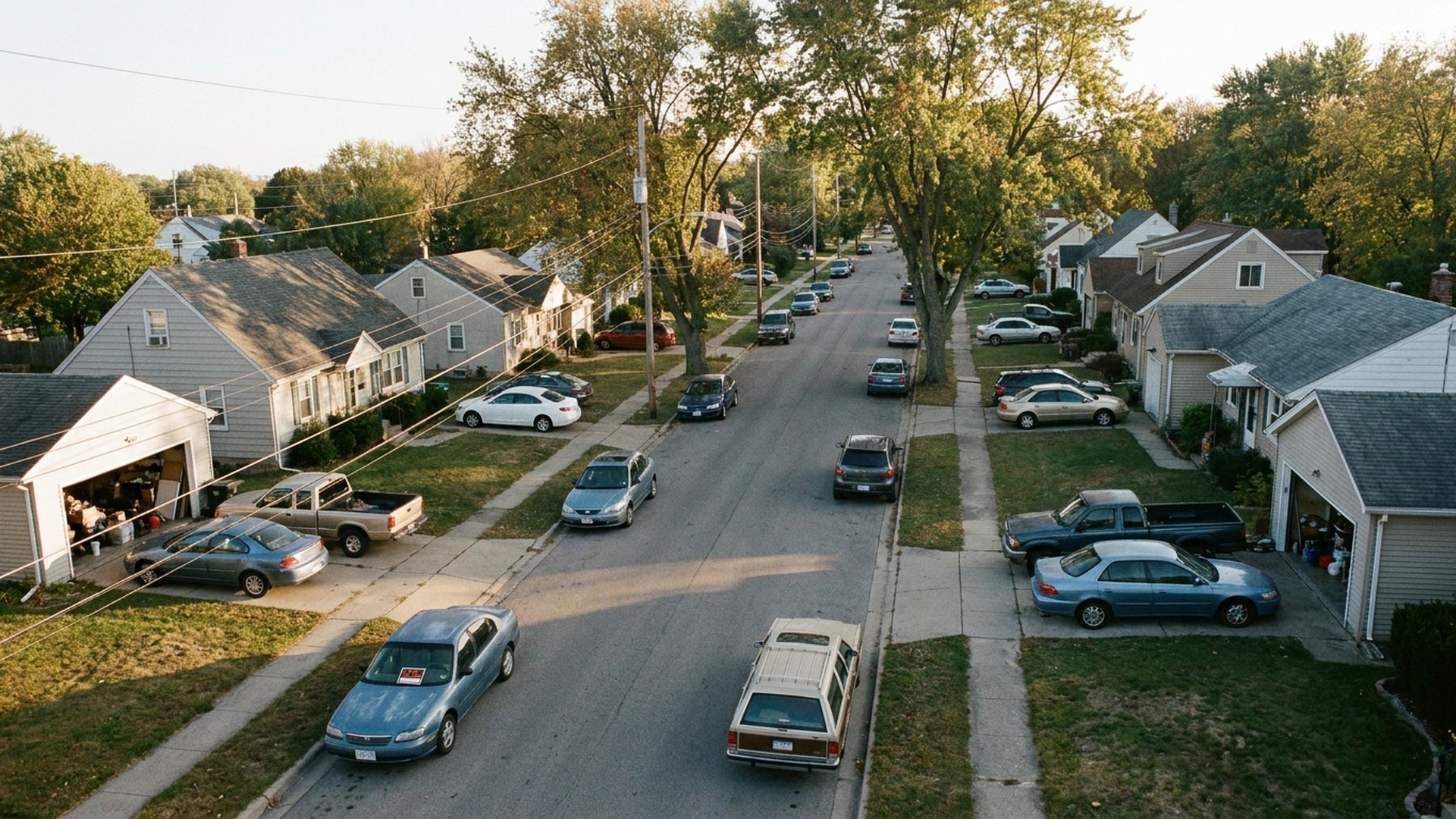
Americans Sold More Cars to Each Other Last Year Than the Entire New Car Industry
About 18 million used cars changed hands with no dealer involved last year. That is nearly half the used market, and more cars than the entire new vehicle industry sold.

Private Seller Sourcing: The Competitive Edge Most Dealerships Are Missing
Franchise dealerships across the country are facing the same brutal truth: the old ways of sourcing inventory just don’t cut it anymore.
Why Private Party Leads Are the New Gold Standard
Dealers have relied on auctions for decades, but the landscape is shifting fast.
See it in Action
Discover how VETTX can supercharge your vehicle buying center. Schedule a free strategy call with our experts today and take the first step towards dominating your market.
